
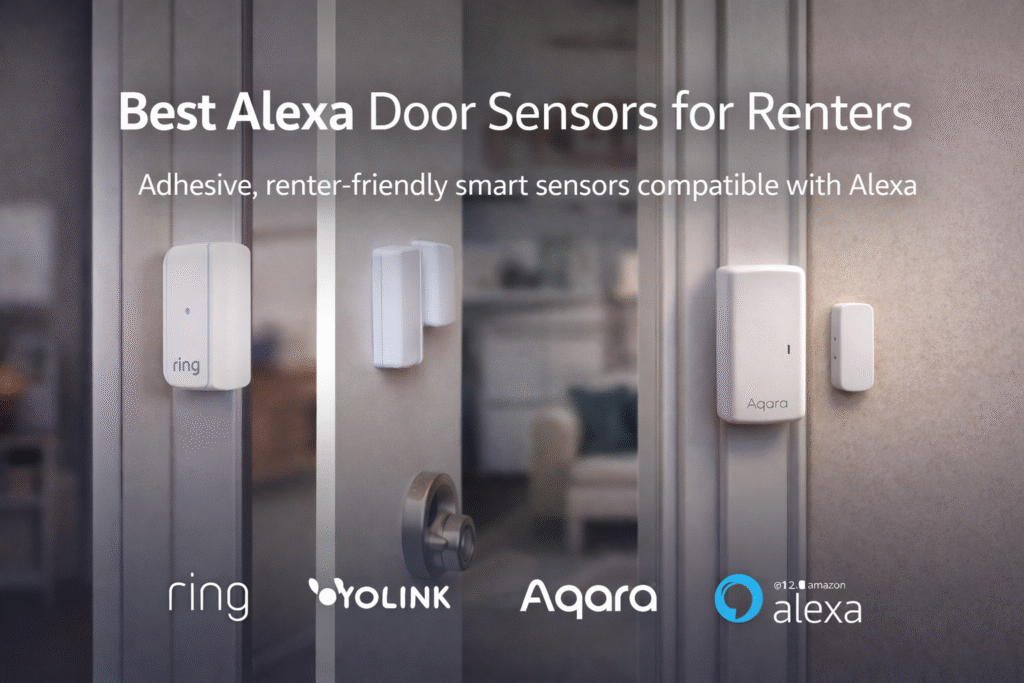
Introduction
Renters often pick door sensors because they promise easy security, then realize the gear can conflict with lease rules or leave sticky residue that’s hard to hide. That mistake produces quiet anxiety: will I lose my deposit, anger my landlord, or expose my routines to a company? If you’ve felt overwhelmed balancing safety, privacy, and lease risk while shopping for Alexa-compatible sensors, you’re not alone. When choosing the best Alexa door sensors for renters, compatibility and reliability matter just as much as installation. Modern sensors follow evolving smart home device compatibility standards that allow devices to communicate across ecosystems while keeping setups simple and removable.
Start small and removable, then grow only if you stay in place. Basic setup → plug-and-play Growing setup → add a bridge Full coverage → centralized hub. This guide prioritizes lease compliance and renter mobility over enthusiast customization. I’ll walk you through renter-safe door sensor choices, how each tier affects removal and privacy, and the trade-offs when connecting to Alexa. Keep setups temporary and landlord-friendly. Door sensors are often the first step toward apartment security, but many renters eventually combine them with Alexa-compatible cameras for apartments to monitor entrances and receive motion alerts. This guide compares the best Alexa door sensors for renters, focusing on easy installation, reliable alerts, and compatibility with Alexa routines.
Quick Picks (Best Alexa Door Sensors for Renters)
Don’t want to compare everything? Start here:
- 🏆 Best Overall: Ring Alarm Contact Sensor (2nd Gen) – most reliable and best for full apartment security setups
- 📡 Best Range: YoLink Door Sensor – strongest signal for larger apartments or tricky layouts
- 💰 Best Budget: Aqara Door and Window Sensor – affordable and great for small spaces
👉 Simple rule: Choose Ring for full security, YoLink for range, and Aqara for budget-friendly setups.
Are Door Sensors Safe for Apartments?
Yes—most door sensors are completely safe for apartments and rentals.
They typically use:
- Adhesive backing (no drilling required)
- Small, lightweight designs
- Easy removal without damage
This makes them one of the most renter-friendly smart security devices available.
🔎 What Are Alexa Door Sensors?
Alexa door sensors (also called contact sensors) are small devices that detect when a door or window opens or closes.
They typically consist of two parts:
- A sensor
- A magnet
When the two separate, the sensor sends an alert to your phone or Alexa system.
In an apartment, this gives you:
- Real-time notifications
- Basic security monitoring
- Automation triggers (like turning lights on when a door opens)
They’re one of the simplest ways to add smart security without installing a full system.
👤 Who This Is For
- Renters worried about deposit loss from permanent installations
- People who want Alexa alerts without drilling holes
- Temporary residents needing easy, removable security
- Privacy-conscious users seeking simple Alexa integration
🏠 Do Door Sensors Work Well in Apartments?
Yes—door sensors are actually ideal for apartments.
Because apartments are smaller and more compact:
- Fewer sensors are needed
- Signals are more reliable
- Setup is faster and easier
They’re also renter-friendly because:
- Most use adhesive (no drilling required)
- They’re easy to remove when you move out
- They don’t modify your door or frame
For renters, this makes them one of the lowest-risk smart security upgrades.
📑 Table of Contents
- Introduction
- Who This Is For
- Quick Comparison Table
- Decision Shortcut
- FAQs
- Final Verdict
- About the Author
📊 Best Alexa Door Sensors for Renters: Quick Comparison
| Product | Contract Required | DIY Install | Monitoring Option | Best For | Works With Alexa |
|---|---|---|---|---|---|
| Ring Alarm Contact Sensor (2nd Gen) | No long-term contract | Yes (removable setup) | Optional monthly plan | Renters planning long-term growth | Yes |
| YoLink Door Sensor (Long Range) | No long-term contract | Yes (wireless & adhesive) | Optional month-to-month | Quick setup & simple control | Yes |
| Aqara Door and Window Sensor | No long-term contract | Yes (compact & wireless) | Optional low-cost plan | Budget-friendly small apartments | Yes |
Do Alexa Door Sensors Require Drilling?
No—most Alexa-compatible door sensors do not require drilling.
They attach using adhesive strips and can be installed in minutes.
For renters, this means:
- No damage to doors or frames
- No tools required
- Easy removal when moving out
Best Alexa Door Sensors for Renters by Use Case
Not all door sensors are the same. The best option depends on your apartment size, setup, and what you want to monitor.
Here’s how to choose:
🔹 Best for Small Apartments
Compact, easy-to-install sensors work best in smaller spaces where range isn’t a major concern.
👉 Ideal for: studios and small apartments
🔹 Best for Long Range (Larger Apartments)
Some sensors offer extended range, making them better for larger apartments or homes with multiple rooms.
👉 Ideal for: multi-room apartments
🔹 Best for Security & Alerts
Sensors that provide fast, reliable alerts and integrate with Alexa routines offer the best security.
👉 Ideal for: entry doors and high-security areas
👉 Key takeaway: Choose based on your apartment size and how important real-time alerts are.
⚡ How to Set Up Alexa Door Sensors (Beginner Guide)
Setting up a door sensor is quick and doesn’t require any technical experience.
Here’s how it works:
- Attach the sensor using adhesive
- Pair it with its app or hub
- Connect it to Alexa
- Create alerts or routines
Once set up, you can:
- Get notified when doors open
- Trigger lights or alarms
- Monitor activity while away
The entire process usually takes less than 10 minutes.
Ring Alarm Contact Sensor (2nd Gen)
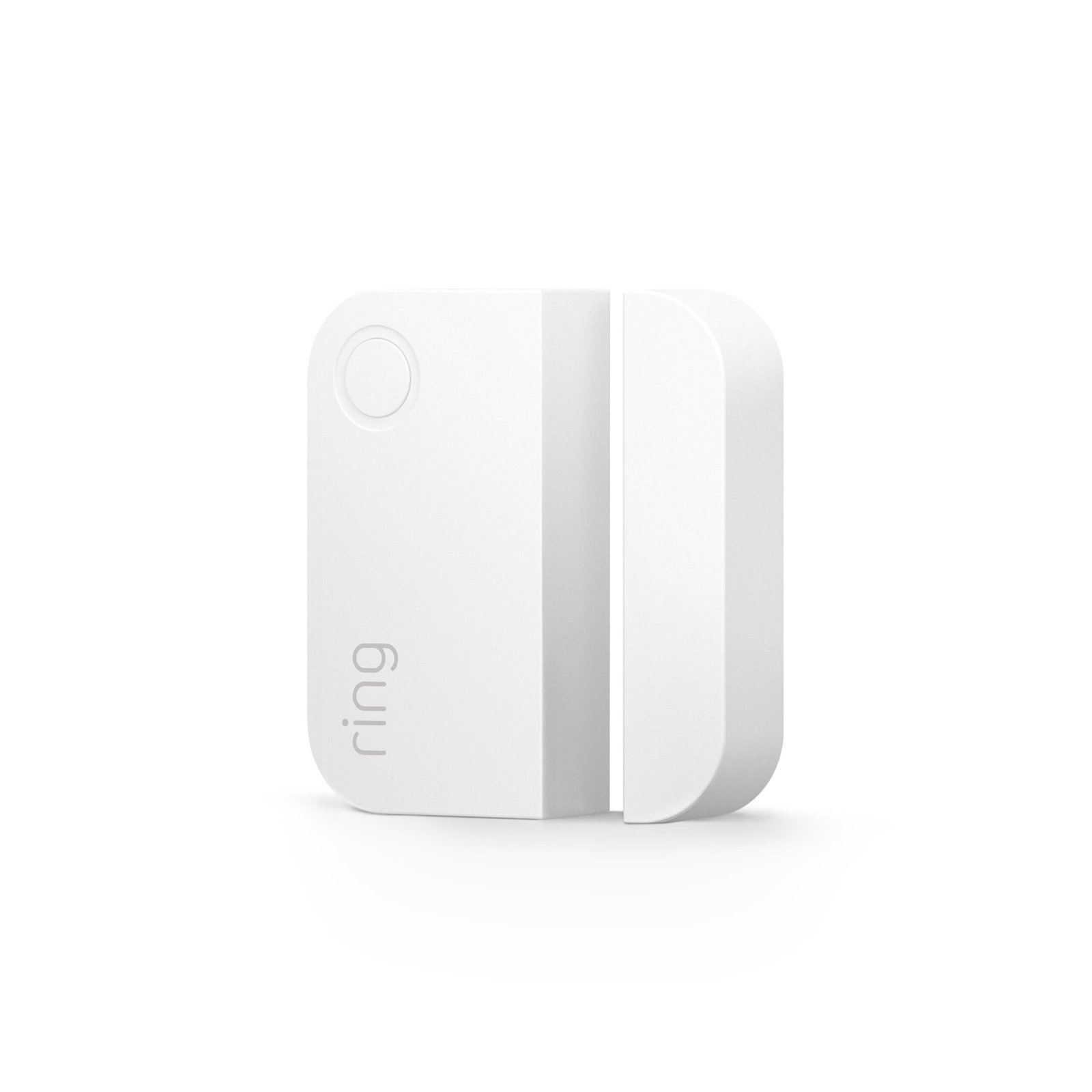
Best For: Renters building a larger Alexa security system
What It Is: A compact magnetic contact sensor that reports open/close events to Ring and Alexa.
Why Renters Love It: Removable adhesive installation and easy growth into a full Ring setup.
Real-Life Scenario: Put on a front door to trigger Alexa routines and receive mobile alerts without drilling.
One Limitation: Full features require Ring ecosystem and optional subscription.
- Battery-powered, easy install
- Works with Ring Alarm and Alexa
🔐 Do Alexa Door Sensors Require a Hub?
Some Alexa door sensors require a hub, while others connect directly.
Here’s the difference:
With a hub:
- Better reliability
- Longer range
- More automation options
Without a hub:
- Simpler setup
- Fewer devices to manage
- Limited range and features
For apartments, both options work—but hub-based systems tend to be more reliable if you plan to expand.
Ring vs Aqara vs YoLink: Which Should Renters Choose?
If you’re choosing between popular Alexa-compatible door sensors, the biggest differences come down to setup, range, and features.
🔹 Ring Door Sensors
- Strong ecosystem
- Reliable alerts
- Often require a hub
👉 Best for: users already using Ring systems
🔹 Aqara Sensors
- Affordable
- Compact design
- Requires hub for full functionality
👉 Best for: budget-friendly setups
🔹 YoLink Sensors
- Extremely long range
- Reliable connectivity
- May require hub for full features
👉 Best for: larger apartments or long-distance coverage
👉 Which should you choose?
- Small apartment → Aqara
- Larger apartment → YoLink
- Full system → Ring
👉 This helps you pick the right sensor without overcomplicating your setup.
How to Choose the Best Alexa Door Sensor for Your Apartment
Choosing the right door sensor depends on your apartment layout and how you plan to use it.
🔹 Choose a Simple Sensor if:
- You want easy setup
- You don’t want extra hubs
- You need basic alerts
🔹 Choose a Long-Range Sensor if:
- You have a larger apartment
- You need reliable connectivity across rooms
🔹 Choose a Full System if:
- You want security automation
- You plan to add more sensors
- You want advanced features
👉 Best strategy for renters: Start simple with one sensor, then expand if needed.
YoLink Door Sensor (Long Range)
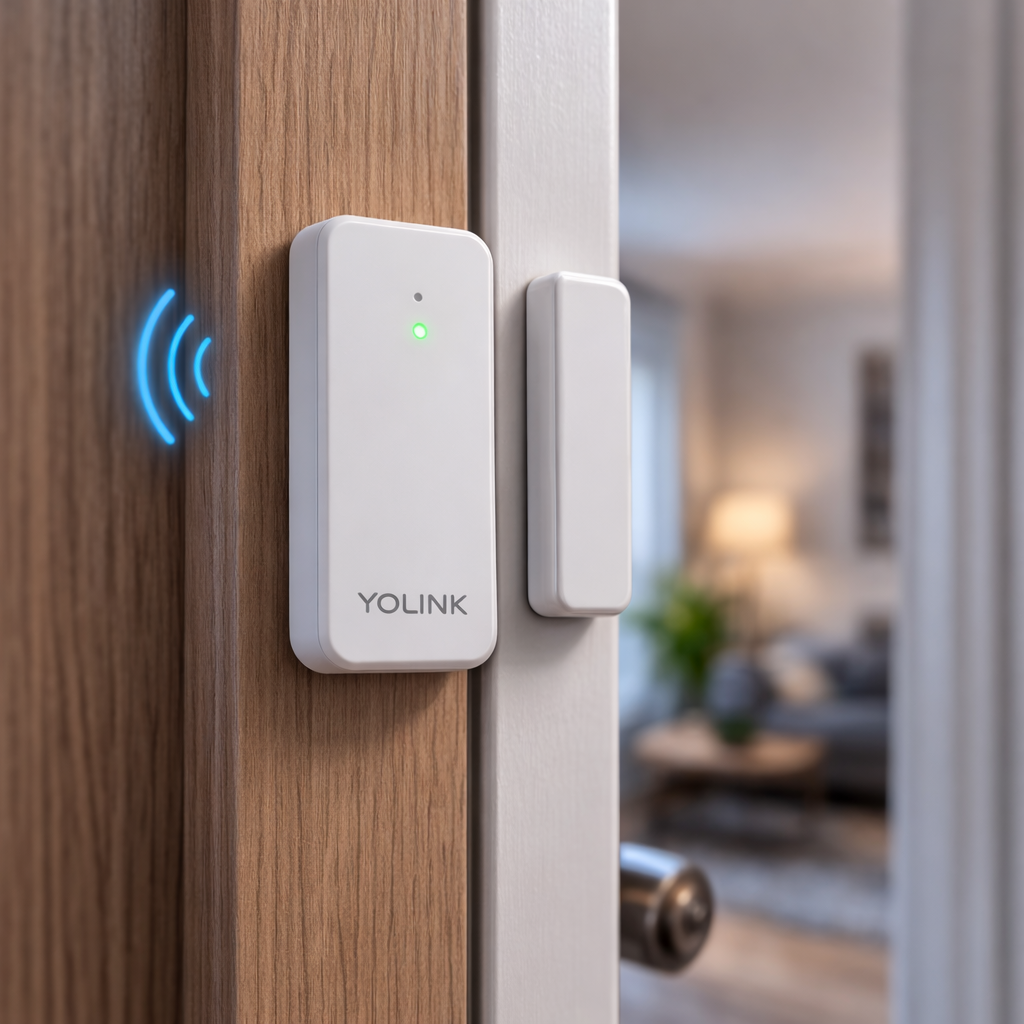
Best For: Long-range reliability in apartments or condos
What It Is: A long-range wireless door sensor ideal for larger apartments and complex layouts.
Why Renters Love It: Excellent range and battery life with simple adhesive mounting and Alexa compatibility.
Real-Life Scenario: Cover a garage entry or distant door where standard sensors lose connection.
One Limitation: May require YoLink bridge for full cloud features.
- Long wireless range
- Battery-efficient, renter-friendly mount
📡 How Far Do Door Sensors Work?
Range is an important factor—especially in apartments with multiple rooms.
Most standard sensors:
- Work within 30–100 feet
Long-range systems (like YoLink):
- Can reach much farther
- Work better through walls
In most apartments, standard range is enough—but if you have a larger layout, range becomes more important.
Some door sensors require a hub for reliable communication, while others connect directly through Wi-Fi. If you prefer simpler setups, consider exploring Alexa devices that don’t need a hub for easy apartment installations.
Aqara Door and Window Sensor
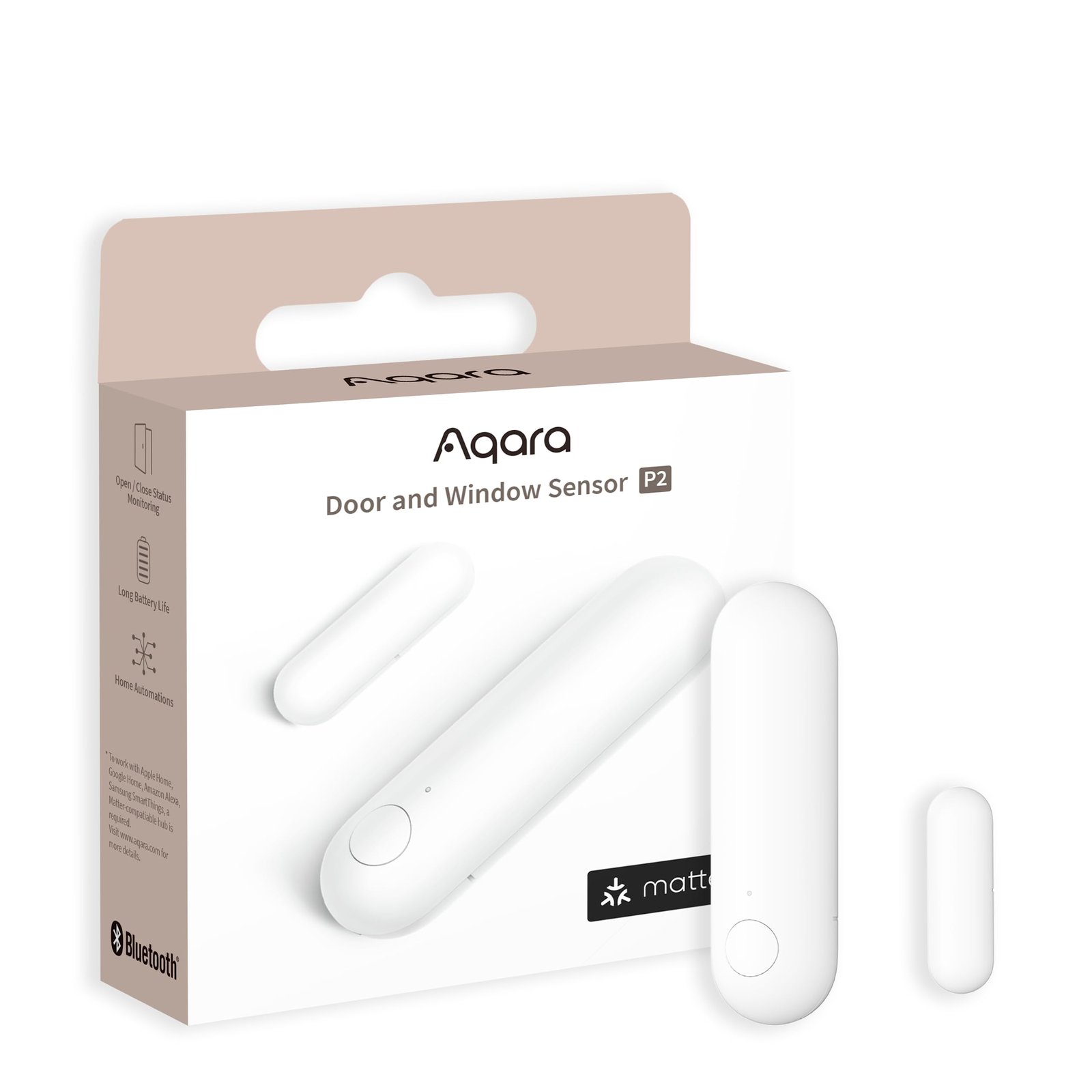
Best For: Budget-friendly smart home automation
What It Is: A compact, budget-friendly contact sensor that integrates into smart home automations.
Why Renters Love It: Low cost, small footprint, and easy adhesive mounting for temporary installs.
Real-Life Scenario: Use on bedroom or closet doors to trigger lights and Alexa routines cheaply.
One Limitation: May need a hub for some advanced integrations.
- Affordable and compact
- Works with many smart systems
Real Apartment Setup (Door Sensor Use Case)
Here’s how renters typically use door sensors:
- Front door monitoring for security
- Closet or cabinet alerts
- Entry alerts when someone comes home
This setup improves safety without complicated installation.
🚫 Do Door Sensors Damage Doors or Walls?
This is a major concern for renters—but the answer is no (if used correctly).
Most sensors use:
- Adhesive backing
- Removable mounting strips
To avoid damage:
- Clean the surface before applying
- Use removable adhesive if needed
- Remove slowly when moving out
When installed properly, door sensors are completely renter-safe.
Do not choose based on features alone. Basic setup favors removable, adhesive door sensors for easy removal and deposit protection. Growing setup adds a bridge for smarter automations without heavy rewiring. Full coverage moves to a centralized hub for seamless Alexa integration. All choices weigh lease rules, privacy, and renter mobility.
🎯 Decision Shortcut
Quick pick based on your lease and mobility needs.
- Basic setup: Use adhesive, wireless door sensors that remove cleanly.
- Growing setup: Add a bridge for better routines with minimal landlord interaction.
- Full coverage: Move to a central hub for full Alexa control and advanced automations.
❓ FAQs
Do I need an additional hub for Alexa door sensors?
Some door sensors work directly with Alexa over Wi‑Fi, while others use a bridge for reliability. Choose renter-friendly options and avoid hardwired hubs unless your lease allows permanent changes.
Will adhesive sensors damage my doors or trim?
Removable adhesive mounts are designed to peel off cleanly and protect deposits. Test a small area and keep original packaging and receipts to restore surfaces before moving out.
Can I use these sensors with Alexa routines and notifications?
Yes—most Alexa-compatible sensors trigger routines and send notifications to your devices. Review privacy settings and monitoring plans to limit data retention and unexpected cloud uploads.
What if my landlord objects to installation?
Offer non-drill mounting options and provide to restore surfaces before move-out. Keeping documentation and receipts helps resolve disputes and protect your deposit.
Do Door Sensors Work Without WiFi?
Some do, but most smart features require WiFi.
Without WiFi:
- Alerts won’t be sent
- App control won’t work
A stable connection ensures proper functionality.
🧠 Best Door Sensor Setup for Renters
If you’re just getting started, keep it simple.
Here’s a beginner-friendly setup:
Step 1: Add 1–2 sensors for main entry points
Step 2: Connect them to Alexa or a hub
Step 3: Set up notifications for activity
Step 4: Create simple routines (like lights turning on)
This setup gives you:
- Basic security
- Real-time alerts
- Smart automation
Without needing a full security system.
What Happens When You Move?
Door sensors are easy to remove and take with you.
- Peel off adhesive
- Reset the device
- Reinstall in your new apartment
No damage, no repairs, no issues with your lease.
Common Mistakes Renters Make with Door Sensors
Avoid these common issues:
- Placing sensors incorrectly (misalignment)
- Using weak adhesive surfaces
- Buying incompatible sensors
- Overcomplicating the setup
Simple placement and setup make the biggest difference.
Decision Shortcut: Best Alexa Door Sensors for Renters
If you want simple security, choose a basic adhesive door sensor.
If you want alerts and automation, choose a WiFi-enabled Alexa-compatible sensor.
For most renters, a simple sensor setup provides reliable security without complexity.
🏁 Final Verdict
For renters balancing deposit risk and Alexa convenience, begin with Basic → plug-and-play sensors that are removable and require no permanent changes. Do not install wired or hard-mounted systems without landlord approval. Install adhesive-friendly sensors and keep receipts and photos to prove you restored the space when you leave.
If you plan to stay longer, Growing → bridge provides more routines without heavy alterations. Full → centralized hub is appropriate only if you can commit to a stable residence and landlord-friendly permissions. Prioritize lease compliance, simple removal, and privacy controls—choose the tier that protects your deposit and peace of mind, not the most features. Door sensors are often the easiest entry point into smart home security. If you want a full setup with alarms and monitoring, explore some of the smart security systems for renters that integrate with Alexa.
For most renters, the Ring Alarm Contact Sensor is the easiest option if you’re already using Alexa. YoLink is better for larger apartments or stronger signal range, while Aqara is a great budget option for simple smart home automation.
👤 About the Author
Craig, Founder of TopRatedByCraig, TopRatedByCraig.com.
Focus on renter-first, lease-safe, scalable smart home security.
Pingback: Best Alexa Routines for Apartments (Easy Automations That Actually Help)