
Introduction
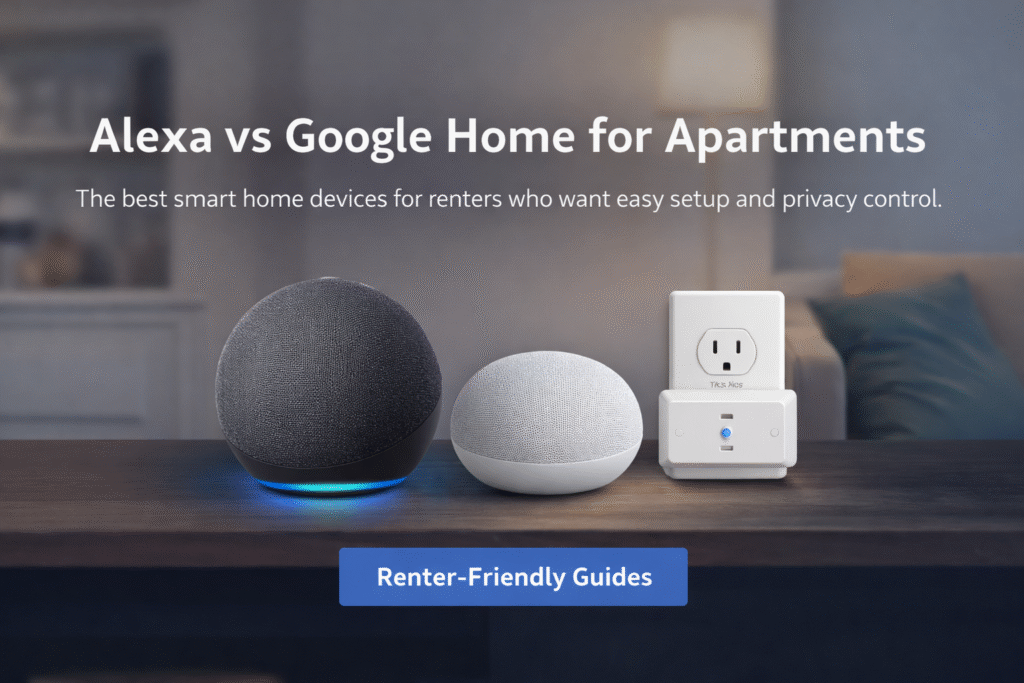
Choosing between Alexa vs Google Home for apartments can be confusing for renters who want smart home convenience without violating lease rules. Renters often pick Alexa or Google Home because of brand buzz, then regret being locked into an ecosystem that complicates moves or lease rules. Choosing on ads or reviews leads to hidden friction — landlord objections, incompatible devices, or unsettled privacy concerns in thin-walled apartments. That uncertainty creates stress when you need simple, removable security and clear control.
You worry whether voice assistants will listen in, whether your existing plugs will pair, and if subscriptions will trap you after a move. Choose for portability and lease-safety, not headline features: Basic setup → plug-and-play. Growing setup → add a bridge. Full coverage → centralized hub. This guide prioritizes lease compliance and renter mobility over enthusiast customization. I focus on simple choices that reduce landlord friction and support small spaces.
Both Alexa and Google Home support hundreds of smart home devices, but compatibility can vary depending on the ecosystem you choose. According to Google Home smart home compatibility, the platform supports a wide range of devices including lights, plugs, thermostats, and security systems.
👤 Who This Is For
- Renters choosing between Alexa and Google Home in apartments
- Tenants needing removable, lease-safe voice assistants
- People worried about privacy in thin-walled units
- Renters who may move and want portable setups
📑 Table of Contents
- Introduction
- Who This Is For
- Quick Comparison Table
- Decision Shortcut
- FAQs
- Final Verdict
- About the Author
Key Differences Between Alexa and Google Home for Apartments
When comparing Alexa vs Google Home for apartments, the biggest difference comes down to ecosystem flexibility and device compatibility. Alexa generally supports a wider range of third-party smart home devices, which can make it easier for renters to expand their setup over time.
Google Home, however, integrates very smoothly with Google services like Google Calendar, Google Assistant, and Android devices. This can make voice commands and daily automation feel more natural for people already using the Google ecosystem.
For renters, the most important factor is choosing devices that are plug-and-play and easy to remove. Both Alexa and Google Home work well with renter-friendly smart plugs, bulbs, and sensors that don’t require drilling or permanent installation.
📊 Alexa vs Google Home for Apartments: Quick Comparison
| Product | Contract Required | DIY Install | Monitoring Option | Best For | Works With Alexa |
|---|---|---|---|---|---|
| Amazon Echo (4th Gen) | No long-term contract | Yes (removable setup) | Optional monthly plan | Renters planning long-term growth | Yes |
| Google Nest Mini (2nd Gen) | No long-term contract | Yes (wireless & adhesive) | Optional month-to-month | Quick setup & simple control | Yes |
| TP-Link Kasa Smart Plug Mini | No long-term contract | Yes (compact & wireless) | Optional low-cost plan | Budget-friendly small apartments | Yes |
Alexa also integrates with a wide range of security devices including lights, plugs, and Alexa-compatible cameras for apartments designed specifically for renters.
Amazon Echo (4th Gen)
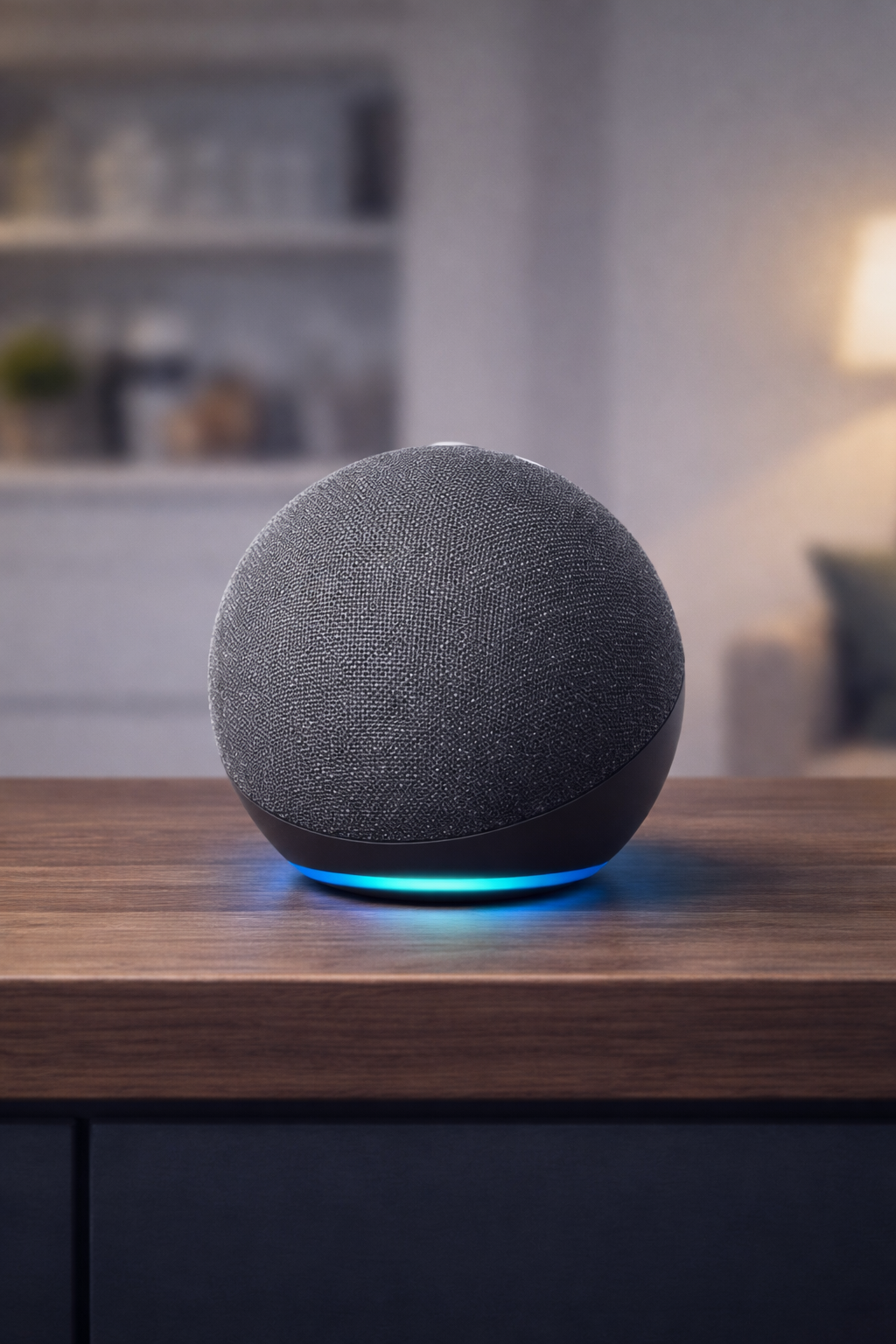
Best For: Renters choosing the Alexa ecosystem
What It Is: Compact smart speaker with Alexa for voice control and routines.
Why Renters Love It: Plug-and-play setup, good sound, easy to move between units.
Real-Life Scenario: Use as a bedside assistant for timers, music, and quick voice controls.
One Limitation: Requires Wi‑Fi and account to access full features.
If you’re building an Alexa setup in a small apartment, starting with an Echo speaker is often the easiest option. You can also explore other Best Alexa devices under $50 for renters that work well in small spaces.
Google Nest Mini (2nd Gen)
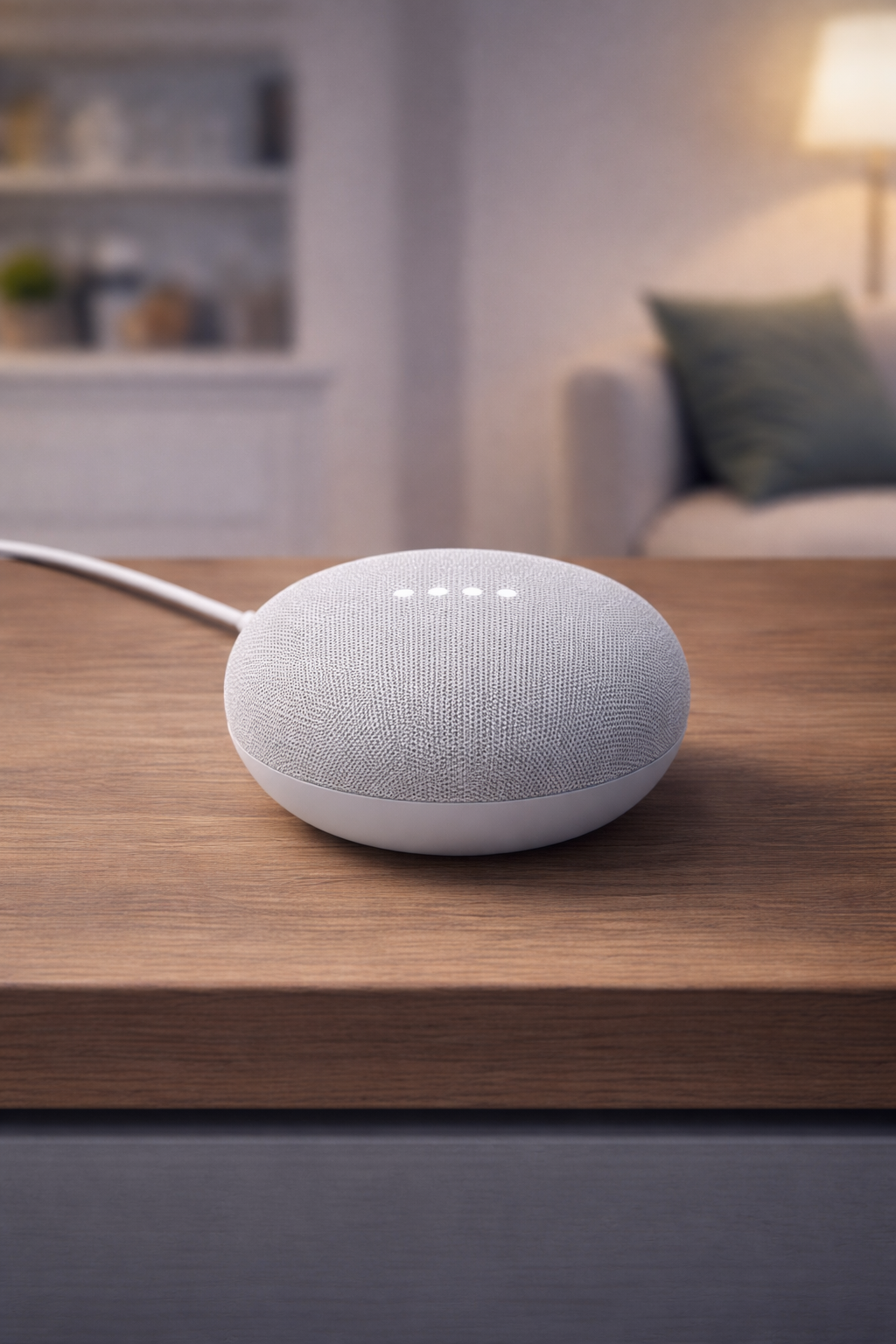
Best For: Renters who prefer Google Assistant
What It Is: Tiny Google Assistant speaker for voice commands and smart control.
Why Renters Love It: Low-profile, affordable, and easy to wall-mount with adhesives.
Real-Life Scenario: Control lights and ask questions from a small apartment kitchen or living room.
One Limitation: Less bass and audio power than larger speakers.
TP-Link Kasa Smart Plug Mini
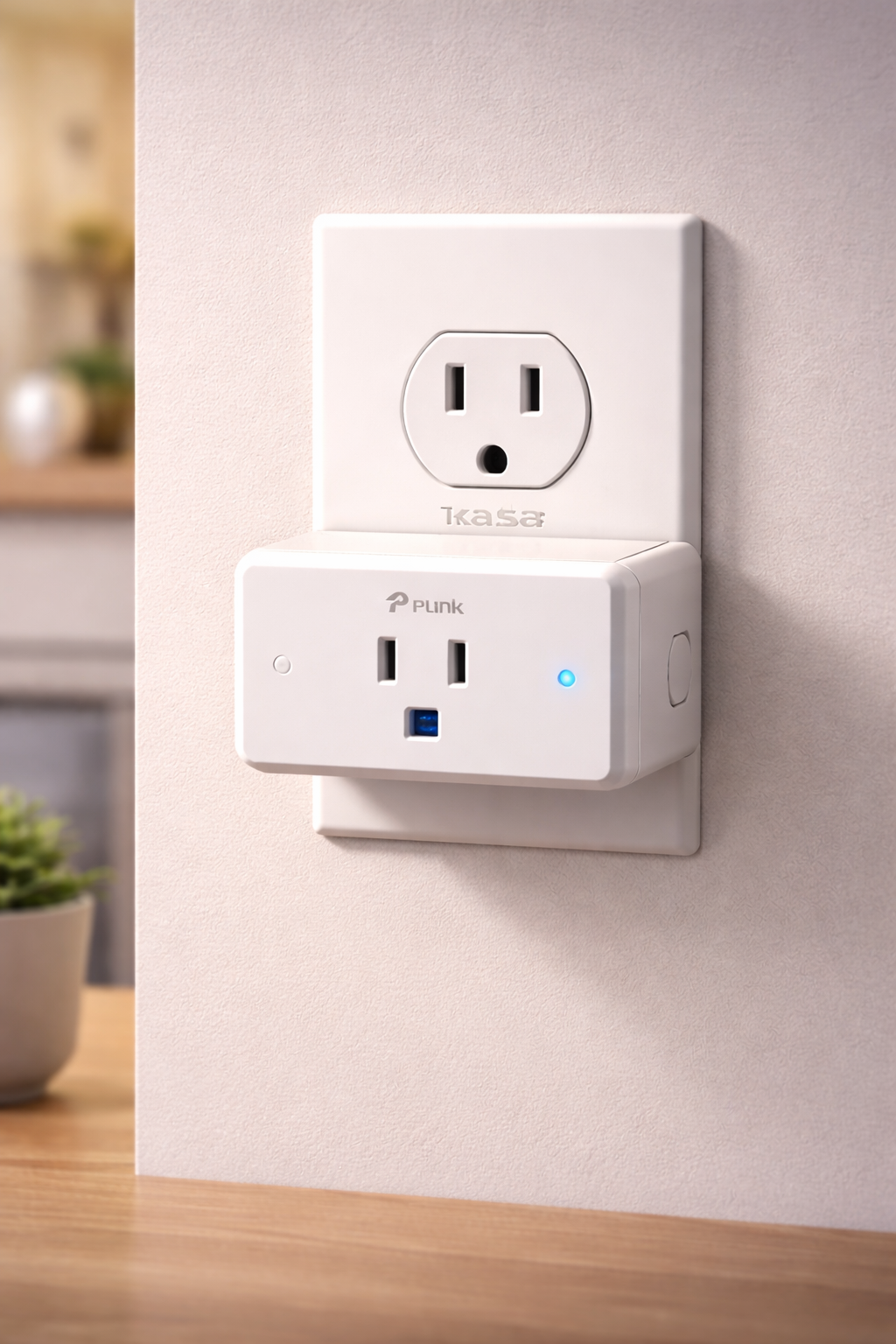
Best For: Renters who want simple smart home automation
What It Is: Compact smart plug enabling voice and app control for devices.
Why Renters Love It: Instantly smarten lamps or heaters without rewiring or complex installs.
Real-Life Scenario: Schedule a lamp to turn on before you arrive home from work.
One Limitation: Requires a nearby outlet and Wi‑Fi connection.
Smart plugs are one of the easiest ways renters can automate lights and appliances. If you’re deciding between options, this guide explains Smart plug vs smart switch for renters and which is better for apartment setups.
Do not choose based on features alone. Basic → plug-and-play focuses on removable speakers and simple voice routines that respect leases. Growing → add a bridge to expand compatibility without permanent wiring. Full coverage → centralized hub is for renters who need coordinated controls and have cleared landlord and privacy concerns tied to ecosystem choice.
🎯 Decision Shortcut
Quick pick for apartment renters.
- Basic setup: Choose a removable speaker and keep installations non-invasive.
- Growing setup: Add a bridge for broader device compatibility without permanent changes.
- Full coverage: Use a centralized hub only after confirming lease permissions and privacy settings.
❓ FAQs
Which assistant keeps my setup lease-safe?
Pick devices that use adhesives or plugs and avoid hard wiring. Check app settings and local voice data; consider privacy options and removable installation.
Will voice assistants breach my privacy with neighbors?
Voice assistants can activate accidentally; place them away from shared walls. Disable voice purchasing, review voice history, and use mute to reduce listening risk.
Can I move devices without breaking my lease?
Most smart speakers are plug-and-play and removable. Save settings to the cloud and de-register devices before moving to avoid account entanglement.
Which assistant integrates with apartment devices like smart locks or thermostats?
Both ecosystems support common brands, but compatibility varies by model. Use bridges for broader support and check landlord permission for any lock or thermostat changes.
When deciding between Alexa vs Google Home for apartments, renters should prioritize compatibility, privacy controls, and simple removable devices.
🏁 Final Verdict
When ecosystem confusion is the primary tension, start small and stay lease-friendly. Basic → plug-and-play gives the safest, most portable foundation; Growing → bridge lets you expand compatibility without permanent changes; Full → centralized hub should only follow with clear landlord approval and privacy checks. Do not assume one assistant is always better for every apartment.
Install devices on removable mounts, mute microphones when idle, and de-authorize accounts before moving out. Prefer the assistant that aligns with your phone and privacy comfort, back up settings, and confirm which smart locks or thermostats are lease-safe before adding them to any hub.
For most renters, Alexa is slightly easier to expand because of the large number of compatible devices. However, Google Home can be a great choice for people already using Google services.
👤 About the Author
Craig, Founder of TopRatedByCraig, TopRatedByCraig.com.
Focus on renter-first, lease-safe, scalable smart home security.